
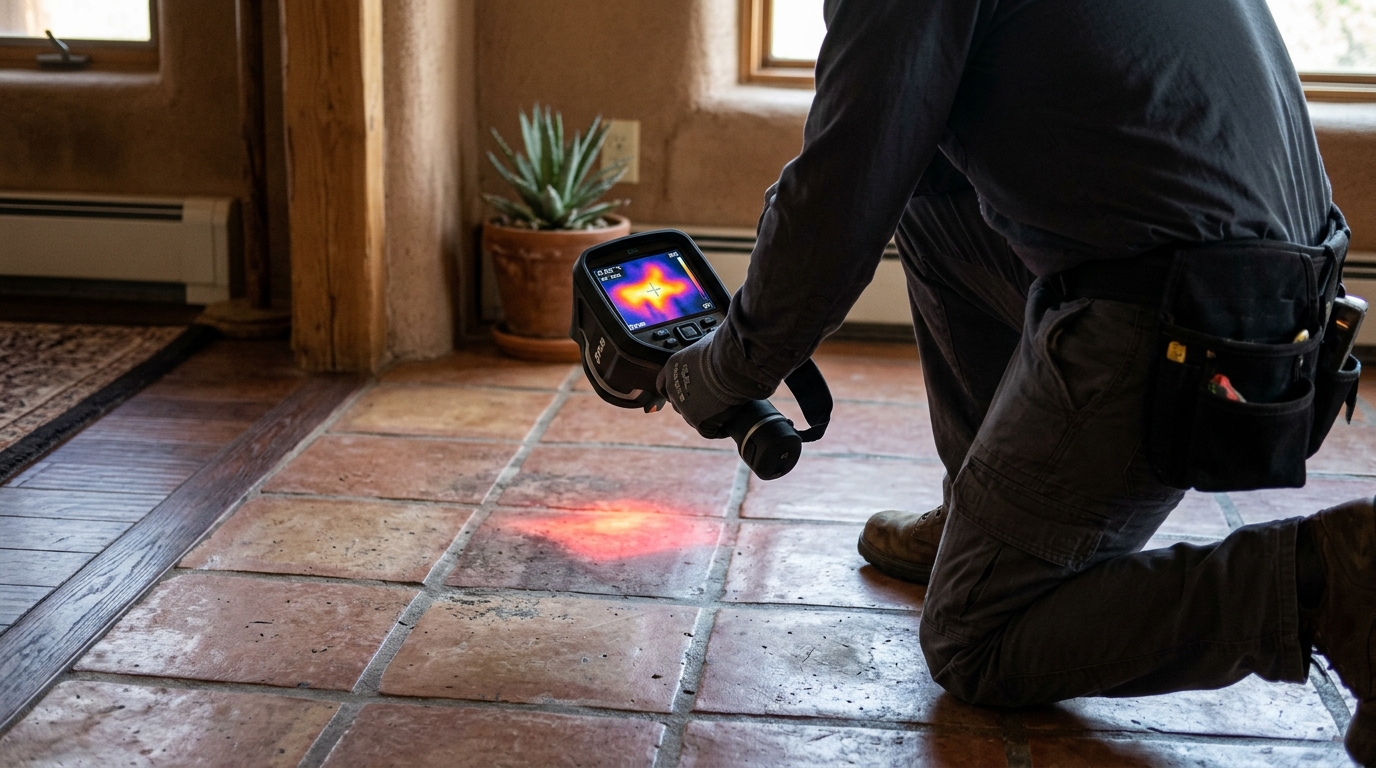
Among all foundation plumbing breakdowns encountered by Hanford homeowners, failures on the domestic hot water side are by far the most frequent. Statistically, more than eighty percent of under-foundation pipe ruptures occur within hot water supply lines. If you step onto your tile, linoleum, or carpet and feel an unmistakable warm spot on floor Hanford foundation areas, your hot water loop has developed an active breach. Prompt intervention for hot water slab leak repair Hanford properties prevents extensive thermal floor damage and protects expensive water heating appliances from premature burnout.
Why Hot Water Copper Lines Fail First Under Foundation Slabs
Underground cold water supply lines remain at a relatively steady ground temperature throughout the year. In sharp contrast, domestic hot water lines experience extreme thermodynamic cycles every single day:
- Thermal Expansion and Contraction: Every time a shower is run or a dishwasher cycles, water heated to 120 or 140 degrees Fahrenheit surges through copper pipes embedded beneath the foundation. The copper pipe expands significantly in length. When water flow ceases, the copper cools and contracts back to ambient soil temperature.
- Aggressive Friction Against Concrete: As copper tubing expands and contracts thousands of times over years of service, it rubs continuously against rough aggregate stone and concrete embedded directly against the pipe exterior. Without protective sleeving, this constant mechanical friction wears down the copper wall until a breach occurs.
- Accelerated Mineral Corrosion: Hanford municipal water carries substantial dissolved minerals. High water temperatures dramatically accelerate the chemical rate of galvanic oxidation and pitting inside copper tubing, leading to rapid pinhole development.
Water Heater Running Constantly Hanford Hazard
When a hot water line ruptures under the slab, heated water escapes around the clock. Your water heater continues firing or heating elements non-stop trying to replenish temperature. This burns out heating elements, causes gas bills to skyrocket, and drastically shortens the lifespan of your water heater.
Recognizing a Hot Water Line Leak Under Slab Foundations
Homeowners can identify a hot water sub-slab breach through several distinctive indicators:
- Noticeable Floor Warmth: A localized patch of floor in a hallway, kitchen, bathroom, or bedroom feels noticeably warm or hot to bare feet.
- Non-Stop Water Heater Operation: Hearing your gas water heater burner firing or electric elements hissing constantly even when no faucets are in use.
- Sudden Spikes in Gas or Electric Utility Costs: Gas bills escalating significantly during mild weather months due to continuous water heating.
- Damp, Warped Flooring Materials: Thermal vapor permeating upwards, loosening floor adhesive, causing vinyl planks to buckle, or darkening grout lines.
- Depleted Hot Water Volume: Running out of hot water rapidly during morning showers because gallons of heated water are continuously escaping beneath the slab.
How Hot-Water Leaks Are Diagnosed with Thermal Imaging
Locating a hot-water line breach is uniquely aided by infrared thermal imaging technology. Technicians utilize high-definition radiometric thermal cameras calibrated to detect subtle surface temperature differentials. As 120-degree water discharges beneath the concrete, it conducts heat through the concrete slab, creating an unmistakable infrared heat signature on the camera monitor. By cross-referencing this thermal plume with acoustic listening devices, technicians isolate the exact point where the hot water line leak under slab foundations has occurred.
Noticing a Warm Floor Patch or Constantly Running Water Heater?
Stop wasting energy and protect your foundation slab. Call our team immediately to arrange targeted hot-water leak diagnostics.
(888) 205-7875Remediation Strategy: Spot Repair vs. Overhead Hot-Side Reroute
When addressing a hot water slab leak, homeowners generally evaluate two primary solutions:
Option A: Direct Spot Repair
Direct spot repair involves cutting and removing flooring, jackhammering an access opening through the concrete, excavating gravel, cutting away the damaged copper pipe segment, and brazing a new section of Type L copper with silver-solder joints. While effective for isolated damage, it causes substantial interior disruption, dust, and flooring replacement expenses. Furthermore, because thermal wear affects the entire hot line, neighboring sections of the same underground copper run remain vulnerable to future leaks.
Option B: Overhead Hot-Side Reroute (Recommended)
In most residential situations, an overhead slab leak reroute of the hot water line is the superior, permanent engineering decision. Technicians cut and cap the failed copper line at the water heater and manifold, leaving the underground pipe permanently abandoned. A brand new, flexible PEX hot-water supply line is installed through interior walls and ceiling or attic spaces, directly connecting the water heater to the plumbing fixtures. This eliminates all concrete jackhammering, preserves your flooring, and permanently removes pressurized hot water from beneath your foundation slab.
If recurring thermal leaks suggest systemic degradation across your entire plumbing network, explore our comprehensive whole-house repiping options, or review our main slab leak repair in Hanford guide for complete diagnostic steps.