
Discovering an under-slab water leak is a stressful experience that immediately raises questions about financial responsibility. Homeowners in Kings County routinely ask: does homeowners insurance cover slab leaks Hanford claims? While every insurance policy carries unique terms and exclusions, the general answer depends heavily on how policies differentiate between the physical plumbing pipe itself, the cost to access that pipe, and the resulting water damage. Our slab leak insurance claim Hanford guidance provides homeowners with the rigorous technical documentation required to navigate claims smoothly.
Important Notice: General Information Only
The information provided here is strictly educational and does not constitute formal legal, financial, or insurance claims advice. Insurance coverage varies widely based on carrier, policy endorsements, age of construction, and deductible tiers. Always review your specific homeowners insurance policy documents and consult directly with your licensed insurance representative.
How Homeowners Insurance Policies Typically Divide Slab Leak Costs
Standard California homeowners insurance policies (such as HO-3 forms) generally divide sub-slab plumbing incidents into three distinct financial categories:
1. The Plumbing Pipe Itself (Rarely Covered)
Insurance carriers typically categorize the actual leaking copper or galvanized pipe as normal wear, tear, or mechanical failure. As a result, the direct labor and material cost to cut out, solder, or replace the few inches of corroded pipe is usually the homeowner responsibility.
2. "Tear-Out and Access" Coverage (Frequently Covered)
This is where insurance coverage often plays a substantial role. Under "access coverage," many policies cover the reasonable labor costs necessary to tear out portions of the building structure—such as breaking through concrete slab foundations, cutting drywall, or removing flooring—to reach and expose the leaking pipe. Once the pipe is fixed, access coverage often covers backfilling and concrete restoration.
3. Resulting Consequential Water Damage (Commonly Covered)
If the sub-slab leak caused sudden, accidental water damage to your home interior—such as ruined hardwood flooring, saturated carpet padding, water-stained baseboards, swollen drywall, or cabinet damage—most standard policies cover the costs of structural drying, mold remediation, and finished floor replacement subject to your deductible.
Why Thorough Diagnostic Documentation Matters to Adjusters
Insurance adjusters do not approve claims based on verbal assertions. When filing a claim, providing verifiable slab leak documentation Hanford adjusters expect is critical. Without objective proof of a sudden pressurized failure, adjusters may suspect ongoing neglect or surface seepage, which can lead to claim delays or denials.
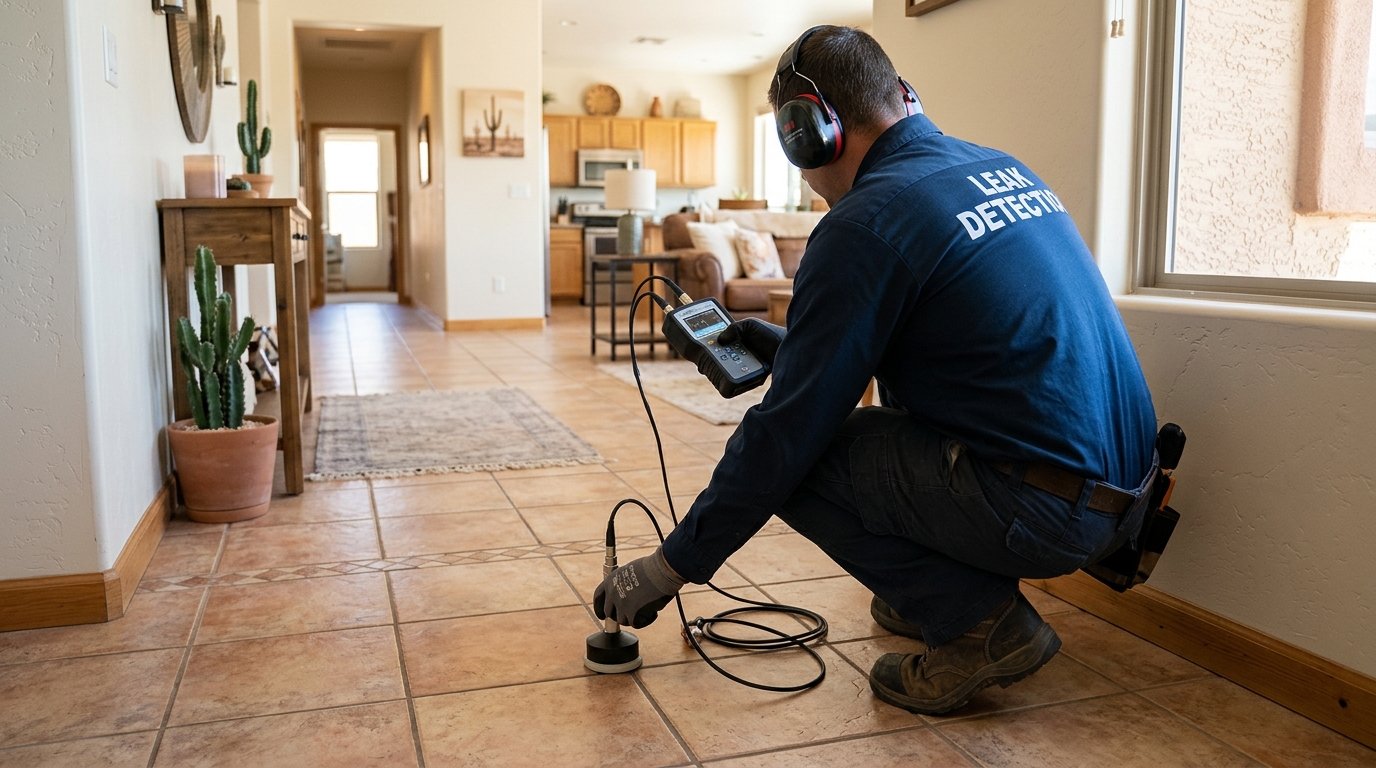
Following our non-destructive diagnostic investigation, we supply property owners with an exhaustive diagnostic verification packet, including:
- Written Technical Inspection Report: An itemized narrative detailing the precise line that failed (e.g., domestic hot water line), testing methodologies utilized, and pressure decay rates recorded under closed test conditions.
- Thermal Imaging Heat-Map Scans: High-resolution radiometric images verifying the exact thermal plume where escaping hot water heated the concrete foundation.
- Moisture Meter Readings: Digital moisture mapping documenting structural moisture levels along baseboards, drywall framing, and flooring substrates.
- High-Resolution Digital Photographs: Clear photo documentation of the mapped leak coordinates, water meter readings, and visible interior moisture impacts.
Need an Official Diagnostic Leak Report for Your Claim?
We provide the comprehensive documentation, photos, and pressure readings insurance carriers require. Call to schedule testing.
(888) 205-7875Immediate Steps to Take When You Discover a Leak
If you suspect an active under-foundation plumbing failure, follow these critical steps to safeguard both your home and your insurance claim:
- Mitigate Further Damage: Shut off the water supply immediately. Insurance policies require homeowners to take reasonable measures to prevent ongoing water damage once a leak is discovered.
- Photograph Everything Before Demolition: Take thorough photographs and videos of damp carpet, swollen floorboards, baseboards, and water heater readings before any demolition or cleanup begins.
- Obtain Professional Non-Invasive Diagnostics: Have a qualified technician execute slab leak detection and generate a written leak report before tearing out floors.
- Notify Your Insurance Carrier: Open a claim promptly, submit your diagnostic report and moisture readings, and request clarification regarding access coverage and flooring restoration rules.
Rerouting vs. Direct Access: Insurance Perspectives
In many instances where direct foundation jackhammering would destroy irreplaceable flooring, adjusters recognize that an overhead slab leak reroute is more cost-effective than concrete demolition and floor restoration. Discussing reroute options with your adjuster can frequently yield approved coverage while saving your finished floors. If extensive corrosion affects the entire property, explore our whole-house repiping solutions, or return to our slab leak repair in Hanford guide for full details.